
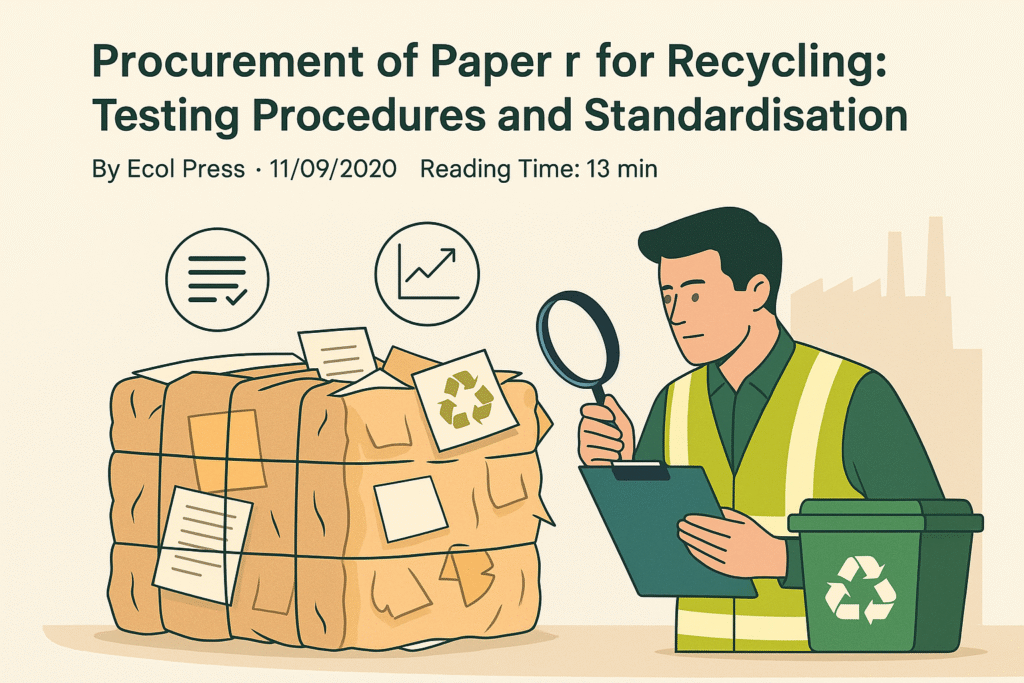
Recycled paper plays a major role in the global circular economy, and the paper industry has been practicing recycling long before it became mainstream. However, managing waste paper, sourcing recycled fibre, and ensuring compliance with constantly changing regulations is becoming more challenging for recycling companies and paper mills.
At ASR-PSIC, we provide inspection, verification, and certification services for waste paper, scrap, and recycled materials. This guide explains how recycled paper is inspected, what standards apply, and how companies can manage procurement safely and legally.
📌 Why Waste Paper Procurement Is Becoming Complex
Due to differences between laws, technical standards, and industry practices, many paper mills face issues when buying recycled fibre. Key challenges include:
- Outdated regulations
- Ambiguous definitions of impurities
- No uniform “End-of-Waste” policy
- Variations in quality among suppliers
- New automated testing systems creating inconsistent readings
Because regulations and standards often conflict, companies are exposed to risks during inspections, audits, and compliance checks. This increases the importance of proper documentation, clear procurement processes, and trained staff.
📘 Standards That Govern Recycled Paper
The recycled paper supply chain in Europe and many countries follows two main references:
1️⃣ Ministerial Decree (Italy) – Feb 5, 1998
Defines:
- What waste can be recovered
- Impurity limits (max 1%)
2️⃣ UNI EN 643 – European Standard
Defines:
- 95 grades of recycled paper
- Acceptable non-paper components (0.25% to 3%)
Because these two systems use different limits and definitions, paper mills often face contradictory evaluation during inspections.
🔄 How the Recycling Chain Works
The waste-to-paper recycling chain includes:
1. Collection Systems
Collect post-consumer or industrial paper waste.
2. Sorting Facilities
Separate paper from non-paper components such as:
- Plastic
- Metals
- Dirt
- Wet materials
They are responsible for:
✔ Cleaning
✔ Sorting
✔ Removing unwanted components
✔ Classifying material according to UNI EN 643
Once sorted and compliant, the material becomes secondary raw material (End-of-Waste).
3. Paper Mills
Buy the sorted material and verify:
- Documentation
- Basic visual inspection
- Compliance with purchase specifications
The paper mill is NOT responsible for re-classifying waste; that responsibility stays with the sorting facility.
🏭 Paper Mill Screening & Quality Checks
Paper mills perform quality control, not waste classification. Typical mill inspections include:
- Checking documentation
- Performing visual checks
- Verifying moisture
- Checking bale stability
- Inspecting packaging and ties
If issues arise, mills may:
✔ Accept the load
✔ Reject the load
✔ Conditionally accept it after testing
✔ Re-grade the material
Industry bodies like CEPI have published guidelines to standardize mill inspections.
🤖 Automated Bale Inspection Systems: Benefits & Risks
New technologies like:
- PTS Balemat
- NIR Moisture & Plastic Monitor
help measure:
- Moisture
- Ash content
- Plastic levels
However:
⚠️ They cannot reliably detect plastic impurities
⚠️ They cannot differentiate between paper-coupled plastic and foreign plastic
⚠️ Micro-sampling cannot represent heterogeneous bale composition
Therefore, except moisture, automated systems cannot be used to judge conformity with UNI EN 643 limits.
⚠️ Risk of Misinterpretation During Inspections
Sometimes inspectors misunderstand automated data, leading to incorrect assumptions such as:
- The mill knowingly accepted non-compliant material
- The supplier misclassified recyclable material as waste
- Plastic readings equal non-paper component levels
These misunderstandings create unnecessary legal and operational complications.
Accurate interpretation requires:
✔ Expertise
✔ Industry knowledge
✔ Clear documentation
✔ Proper training
🛡 How Paper Mills Can Protect Themselves
To avoid compliance issues, mills should establish strong procurement procedures:
✔ Supplier Verification
- License checks
- COMIECO or similar registrations
- Permits & certifications
✔ Clear Purchase Orders
Include:
- Grade
- Standard reference (UNI EN 643)
- Moisture limits
- Allowed non-paper components
✔ End-of-Waste Declarations
Especially for imported materials.
✔ Lot Traceability
Ensure every bale can be traced back to its supplier and documentation.
✔ Non-Conformity Handling
Define steps for:
- Re-grading
- Rejecting
- Moisture disputes
- Plastic overload
✔ Staff Training
Procurement and QC staff must be trained in:
- Visual inspection
- Documentation checks
- Handling disputes
- Sampling procedures
Training is essential to ensure consistent judgments and avoid misinterpretations during audits.
🧾 Conclusion
The waste & recycled paper sector needs clearer, modernized regulations. Until then, paper mills and recycling companies must rely on:
- Standardized internal procedures
- Industry guidelines
- Traceable documentation
- Skilled staff
- Reliable inspection partners
At ASR-PSIC, we help companies minimize risk by offering professional inspection and certification services that ensure every load meets quality, safety, and compliance standards.